
Pistachio Pesto
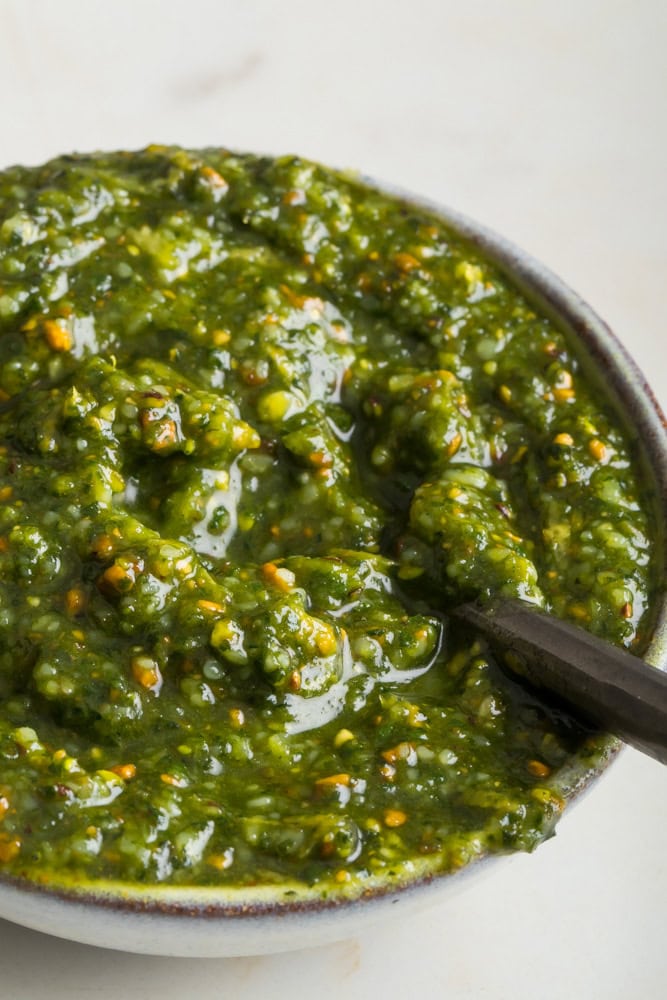
Pistachio pesto is a twist on a classic that’s the perfect for mixing in pasta, topping veggies or pizza. An easy pesto recipe where the pistachios add their nutty flavor. Only a few ingredients needed and the recipe can be made in a blender or food processor.
Recipe Highlights
- How it taste: This pistachio pesto is delicious. All the notes shine from the nutty flavors of the pistachio and parmesan to the olive oil used. The basil is what gives the pesto it’s herby notes and a touch of lemon adds a bite of acidity to bring it all together.
- Skill level: This is a super easy pistachio pesto. All you need is a blender or food processor and a scale. You weigh out the basil and all the rest of the ingredients you toss in to get blended. Add salt and pepper to taste and you’re finished.
- Storage: You’ll have no problem storing this pesto in the fridge for 3-4 days. You can even freeze it for later if needed.
Ingredient tips
- Basil: Fresh basil of course and you want to remove the leaves from the stem. You can place them in the food processor whole with no issues.
- Pistachios: Roasted pistachios are recommended because the flavor is stronger.
- Parmesan: I recommend freshly grated parmesan because the flavor is much stronger. If needed you can use pre-grated and the recipe will still come out delicious.
- Oil: Olive oil is what you want! You want one that you like the flavor because you will taste it. A neutral oil can be used like vegetable oil if you’re on a budget but you will lose some great flavors if you go that route.
Chef’s tips
- Measure the basil by grams because there is too much room for error trying to measure out a cup of basil. If you don’t measure them out you may have to add more or less olive oil to compensate.
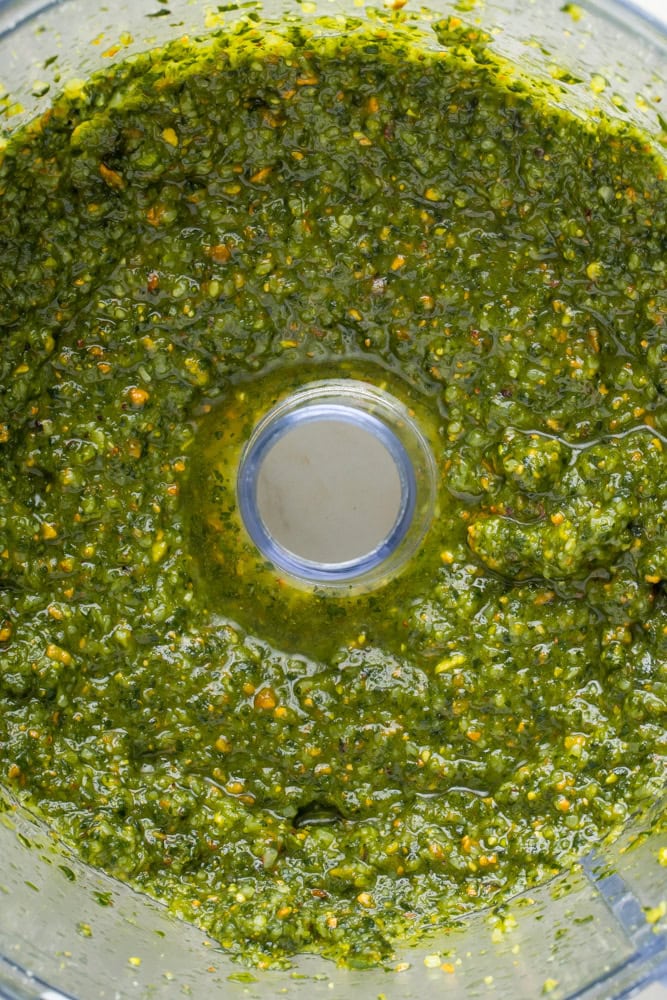
- When the food processor is on, add the oil slowly. It results in a much smoother blend and texture in the end.
- If you keep the pistachio pesto longer than 3-4 day in the fridge, be sure to freeze it or toss it out. The oil will stop the basil and other ingredients from going bad or browning rather but they can still spoil and allow other bacteria to grow*.
How To Make Pistachio Pesto
- Remove the basil leaves from the stems. Add them into the food processor along with pistachios.
- Next, add in the minced garlic and parmesan.
- Turn on the food processor and add the oil ass the ingredients are spinning. Once all the oil is added you’ll add in the lemon then salt and pepper to taste.
Storing
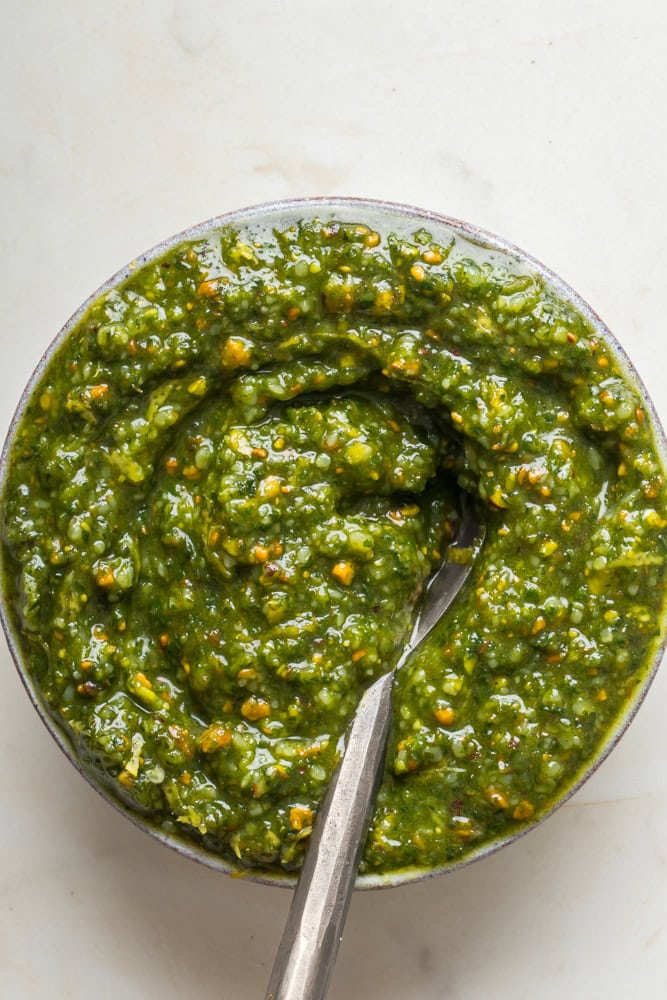
You can store the pistachio pesto in an airtight container for 3-4 days. If it’s longer than that I recommend freezing the pistachio pesto.
If u have an ice cube tray or something to separate it, that’s great. That way you can pull out smaller portions to use as you wish.
Serving suggestions
Pistachio pesto is a delicious topping or sauce. Here are a few suggestions on how to serve it:
- Pasta
- Veggies
- Spread on sandwiches
- Pizza
- Salad dressing
- Topping for things like potatoes, toast or yuca
Pistachio recipes to try next
- Pistachio Fluff
- Pistachio Pudding Cake
- Pistachio Butter Bread
- Pistachio Rice Krispie Treats
- Pistachio Crusted Salmon
- Pistachio Fluff
Follow Sugarless Crystals on Pinterest & Instagram for all my recipes!

Pistachio Pesto
Pistachio pesto is a twist on a classic that's the perfect for mixing in pasta, topping veggies or pizza. An easy pesto recipe where the pistachios add their nutty flavor. Only a few ingredients needed and the recipe can be made in a blender or food processor.
Print
Pin
Rate
Servings: 10 serving
Calories: 143kcal
Equipment
- Food processor or blender
Ingredients
- 36 grams basil about 2 cups
- 1/2 cup pistachios
- 1/2 lemon juice & zest of 1/2 the lemon
- 2 cloves garlic finely minced
- 1/2 cup olive oil
- 1/4 cup parmesan grated
- salt & pepper to taste
Instructions
- Remove the basil leaves from the stem and add the leaves into the food processor. Also add in the minced garlic, pistachio ad parmesan.
- Turn the food processor on then start drizzling the olive oil in until you've added it all. Turn off the food processor then pour the contents into a bowl.
- Now, zest and juice half a lemon into the pesto. Then, add salt and pepper to taste. You're now ready to serve the pistachio pesto as you please.
Notes
The nutrition facts are a rough estimate of 10 servings. This will vary because it’s a pesto and can be used for many different things in different volumes.
Nutrition
Calories: 143kcal | Carbohydrates: 3g | Protein: 2g | Fat: 14g | Saturated Fat: 2g | Polyunsaturated Fat: 2g | Monounsaturated Fat: 10g | Cholesterol: 2mg | Sodium: 41mg | Potassium: 86mg | Fiber: 1g | Sugar: 1g | Vitamin A: 236IU | Vitamin C: 4mg | Calcium: 45mg | Iron: 0.5mg
Tried this recipe?Mention @sugarlesscrystals or tag #sugarlesscrystals!