
Cathead Biscuits
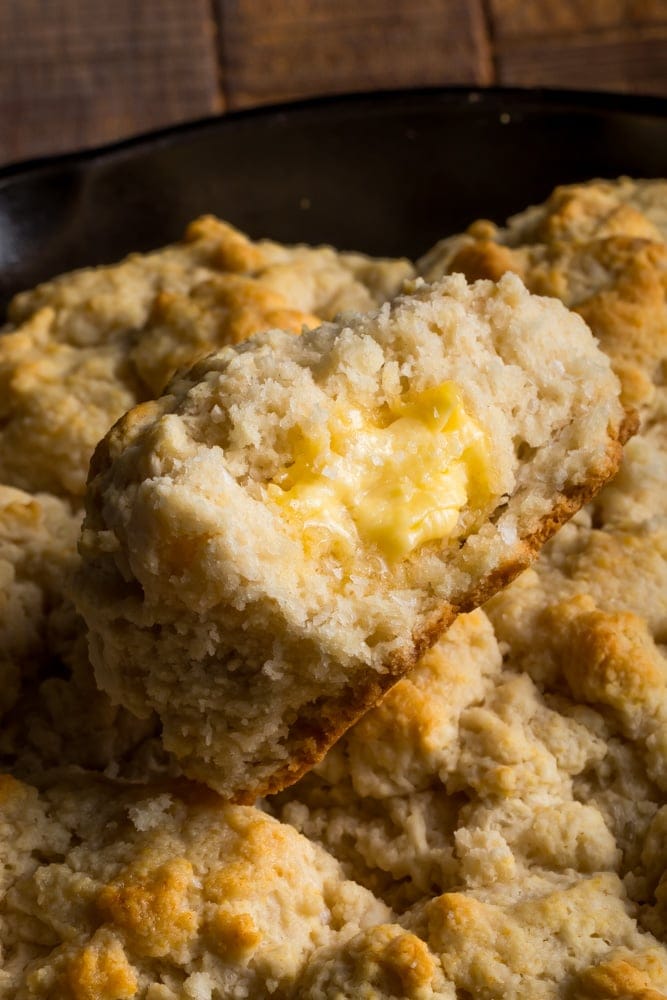
Cathead Biscuits are large, rustic Southern biscuits known for their fluffy, tender centers and golden tops. Unlike traditional cut biscuits, they’re formed by hand and placed close together in a skillet, which gives them their oversized shape and soft pull-apart sides.
This version uses White Lily self-rising flour, cold butter, shortening, and whole buttermilk for a soft crumb with plenty of buttery flavor. Each biscuit is formed into a large portion and baked in a cast-iron skillet until browned on top and tender in the center.
Why You’ll Love This Recipe
What Are Cathead Biscuits?
Cathead biscuits are oversized Southern biscuits with a rustic shape, tender center, and golden exterior. Instead of rolling out the dough and cutting neat rounds, the dough is portioned by hand and placed directly into a skillet or baking pan.
They get their name from their size—the biscuits are traditionally made large enough to be compared to a cat’s head. Their rough, hand-formed shape is part of what separates them from the more uniform cut biscuits most people are familiar with.
Cathead Biscuits vs. Regular Biscuits
The main difference is how they’re shaped. Traditional cut biscuits are rolled or patted out, then cut into neat rounds with a biscuit cutter. Cathead biscuits are much more rustic—the dough is portioned by hand and placed directly into the pan without rolling or cutting.
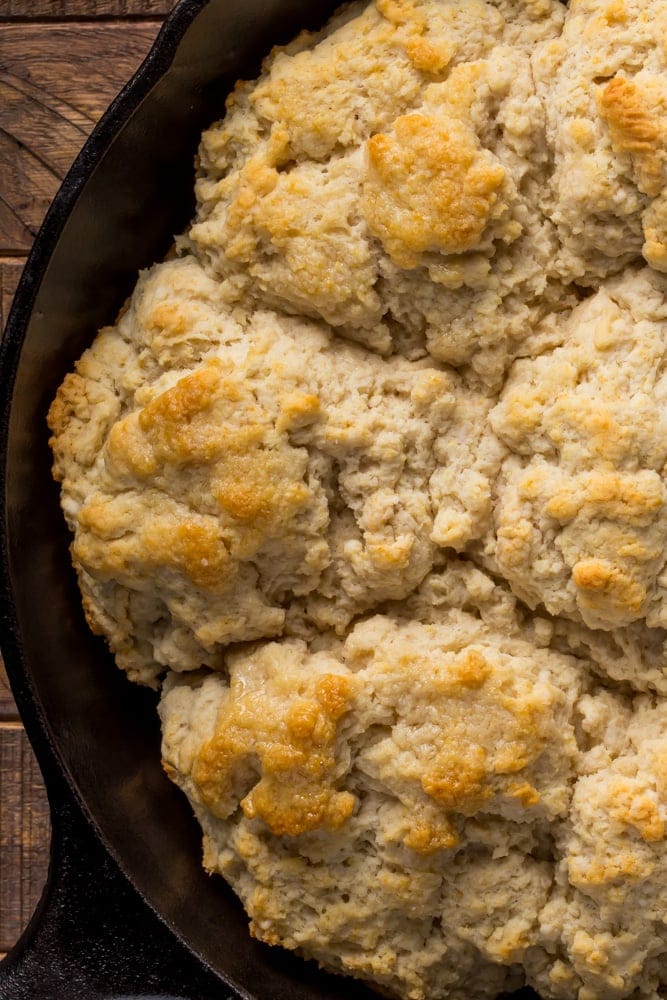
Cathead biscuits are also typically larger. In this recipe, each biscuit is about 125 grams, which gives you the oversized shape the style is known for. Because the biscuits bake close together in the skillet, the sides stay softer while the tops and exposed edges brown.
Ingredient Tips
- White Lily self-rising flour: Use 4 cups. Its softer texture works especially well for tender Southern biscuits. You can also use 4 cups all-purpose flour + 3 tablespoons baking powder; I tested the recipe with this combination as well.
- Cold salted butter: Use 6 tablespoons, grated. Freeze the butter for about 10 minutes first to make grating easier.
- Shortening: Use 6 tablespoons along with the butter. The shortening helps create a softer crumb, while the butter brings the flavor and helps the tops and edges brown. You can also make the biscuits with all butter or all shortening instead of combining the two; the final texture and flavor will reflect whichever fat you use.
- Whole buttermilk: Use 1½ cups to bring the dough together and give the biscuits their soft, tender interior.
- Salt: Just ½ teaspoon is needed since the flour and butter already contribute seasoning.
- Melted butter or vegetable oil: Use it to coat the skillet and brush the tops before baking. Melted butter adds more flavor, but vegetable oil also works.
How To Make Cathead Biscuits
- Preheat the oven to 425°F.
- Add 4 cups of flour to a large bowl. Add the grated cold butter and shortening, then use your fingers to work the fats into the flour. Squeeze and rub the butter and shortening into the flour until they’re distributed throughout.
- Pour in 1½ cups whole buttermilk and mix just until the dough comes together.
- Coat the bottom and sides of a 10-inch cast-iron skillet with about 1 tablespoon melted butter or vegetable oil.
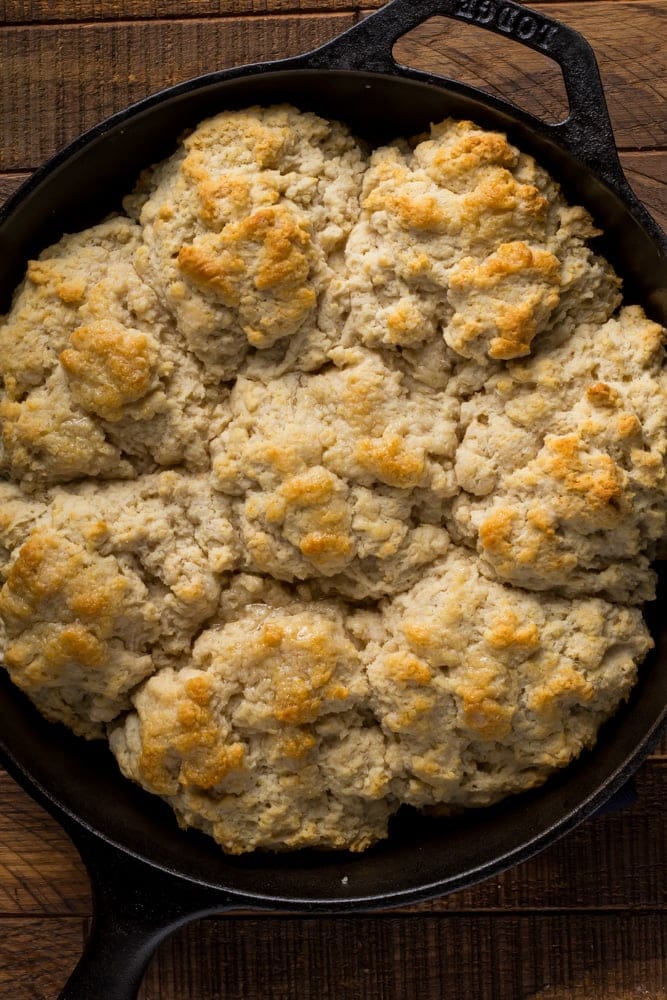
- Divide the dough into 8 large portions and arrange them around the outside of the skillet with one in the center. Each biscuit will be about 125 grams if you want to weigh them, but weighing isn’t necessary.
- Brush the tops with melted butter or lightly coat them with oil. This helps protect the small peaks of dough from becoming too dark while baking.
- Bake for 20–25 minutes, until the biscuits have risen and the tops are browned.
- Remove from the oven and brush the warm biscuits with the remaining 1 tablespoon melted butter before serving.
Chef’s Tips
Frequently Asked Questions (FAQs)
Why are they called cathead biscuits?
They get their name from their oversized shape. Cathead biscuits are traditionally made much larger than standard biscuits—roughly the size of a cat’s head.
What is the difference between a cathead biscuit and a regular biscuit?
Cathead biscuits are usually larger and more rustic. Instead of rolling and cutting the dough into neat rounds, the dough is portioned by hand and baked close together in a skillet or pan.
What are some common mistakes when making cathead biscuits?
For this recipe, keep the butter cold, work the butter and shortening evenly into the flour, and portion the biscuits fairly evenly so they bake at a similar rate.
What makes a good cathead biscuit?
A good cathead biscuit should be large, tender and fluffy inside, with a golden top and slightly crisp exterior. Using cold butter, shortening, buttermilk, and keeping the biscuits close together while baking helps create that texture.
What To Serve With Cathead Biscuits
Cathead biscuits work well anywhere you’d normally serve a Southern biscuit. Their large size makes them especially good for splitting open and adding something sweet or savory.
- Serve warm with butter, honey, jam, or preserves.
- Spoon sausage gravy over the top for a hearty breakfast.
- Serve alongside eggs, bacon, or breakfast sausage.
- Pair them with fried chicken or other Southern comfort-food dinners.
- Split one open and use it for a breakfast sandwich.
More Biscuit Recipes
- Pancake Mix Biscuits – Easy homemade biscuits made with pancake mix for a quick shortcut.
- Cheddar Bay Butter Swim Biscuits – Buttery biscuits baked with cheddar and savory Cheddar Bay-style flavor.
- Garlic Parmesan Butter Swim Biscuits – Rich, buttery biscuits with garlic and Parmesan throughout.
- Blueberry Butter Swim Biscuits – Soft butter swim biscuits filled with blueberries for a sweet breakfast option.


Southern Cathead Biscuits
Equipment
- 10 inch cast iron skillet
Ingredients
- 4 cup self-rising flour White Lily brand or sub with 4 cups all-purpose flour + 3 tablespoons baking powder
- 1/2 teaspoon salt
- 6 tablespoon salted butter cold & grated
- 6 tablespoon vegetable shortening
- 1.5 cup buttermilk
- 2 tablespoon butter melted & divided, or sub with vegetable oil
Instructions
- Preheat the oven to 425°F.
- Add the flour and salt to a large bowl. Add the grated cold butter and shortening, then use your fingers to squeeze and work the fats into the flour until evenly distributed.
- Pour in the buttermilk and mix just until the dough comes together.
- Coat the bottom and sides of a 10-inch cast-iron skillet with 1 tablespoon melted butter or vegetable oil.
- Divide the dough into 8 large portions and arrange them around the skillet, with one biscuit in the center. Each portion will weigh about 125 grams if you choose to weigh them.
- Brush the tops with melted butter or oil, then bake for 20–25 minutes, until risen and browned on top.
- Remove from the oven and brush the warm biscuits with the remaining 1 tablespoon melted butter before serving.